
How Perfume Ingredients Are Sourced: Inside ICBM’s Material Standards
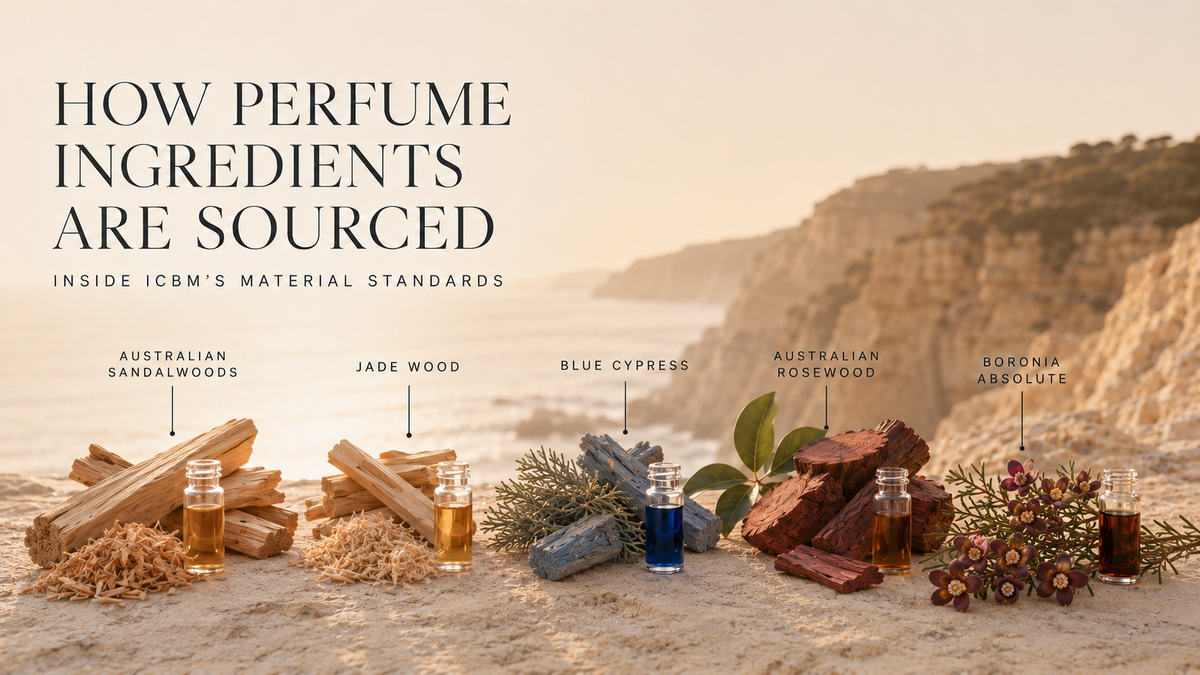
Perfume begins long before a formula reaches the laboratory. Every fragrance is shaped by the origin, processing, consistency and character of the materials used to create it.
At ICBM, ingredient sourcing is part of the creative process. We select natural extracts, modern aroma molecules and specialist perfumery materials through established professional sources, with close attention to quality, traceability and suitability for fine fragrance.
Where do perfume ingredients come from?
Modern perfumery uses an extensive palette of natural and manufactured fragrance materials. Each category contributes something different to the structure, performance and identity of a perfume.
Natural perfume ingredients may originate from flowers, woods, roots, leaves, seeds, fruits, grasses and tree resins. Their aromatic material can be collected through methods such as distillation, pressing or specialist extraction.
Modern aroma molecules are created under controlled manufacturing conditions. They can provide precision, consistency, diffusion and scent effects that may be difficult or impossible to obtain directly from nature.
A sophisticated fragrance does not depend on choosing natural ingredients instead of modern molecules. It depends on understanding how carefully selected materials work together.
The principal types of perfume ingredients
Essential oils
Essential oils are aromatic materials commonly obtained by distilling plants or pressing the peels of citrus fruits.
Examples include bergamot, cedarwood, patchouli, vetiver and frankincense. Their scent can vary according to the plant variety, geographic origin, climate, soil, harvest and processing method.
Bergamot oil, for example, can add fresh citrus brightness. Vetiver oil may provide earthy, woody or smoky qualities. Cedarwood can create dryness, structure and warmth.
Absolutes and specialist extracts
Some delicate ingredients cannot be effectively captured through ordinary distillation. Specialist extraction methods are used to preserve more of their natural aromatic character.
Rose, jasmine, osmanthus and other flowers may be represented as absolutes. These concentrated extracts can introduce depth, texture and complexity to a perfume.
An absolute is not automatically superior to an essential oil. Each extraction method produces a different expression of the original plant.
Resins and balsams
Resins and balsams are aromatic substances produced by certain trees and plants. Perfumers use them to create warmth, depth and a lasting foundation within a fragrance.
- Benzoin can smell smooth, sweet and comforting, with impressions of vanilla, caramel and warm resin.
- Labdanum can create a deep amber character with leathery, resinous and slightly smoky qualities.
- Myrrh can smell dark, balsamic and gently spiced, sometimes with earthy or smoky dimensions.
- Fir balsam can bring the scent of evergreen forests, combining fresh coniferous notes with sweet resinous warmth.
These materials are often thicker and darker than essential oils. In a finished perfume, they can connect other ingredients, soften sharp edges and help the fragrance develop with greater richness over time.
Woods and roots
Materials obtained from woods and roots often form the deeper foundation of a fragrance.
Sandalwood can smell creamy, warm and softly woody. Cedarwood may feel drier and more structured. Vetiver can present earthy, smoky, green or mineral qualities. Orris can introduce powder, suede, violet and cool earthy effects.
The quality of these materials may be influenced by species, origin, maturity, processing and the part of the plant used.
Modern aroma molecules
Aroma molecules expand the perfumer’s creative palette. Some recreate effects found in nature, while others produce entirely new olfactory experiences.
They can add radiance, softness, transparency, diffusion, texture or lasting structure. They can also help natural ingredients perform more clearly and consistently within a formula.
Natural and manufactured materials are not opposing standards of quality. Both can be exceptional or unsuitable. What matters is their specification, consistency, character and purpose within the finished fragrance.
Why are some perfume ingredients so expensive?
The price of a fragrance material can reflect far more than its scent. Agricultural yield, growing time, harvesting, extraction, skilled labour, geographic origin, quality grade and supply availability can all influence its cost.
Some materials require a substantial quantity of botanical matter to produce a very small amount of aromatic extract. Others require years of cultivation, maturation or specialist processing before they are ready for perfumery.
Why orris is precious
Orris is one of perfumery’s most precious natural materials. It comes from the underground rhizomes of certain iris plants rather than from the flower itself.
Producing genuine orris requires cultivation, harvesting, careful preparation, maturation and specialist extraction. The extended process and limited aromatic yield contribute to its exceptional cost.
In a fragrance, orris can create powdery, woody, earthy, violet or suede like effects. Its value comes not only from rarity, but also from the complexity it can bring to a composition.
Why rose materials can be costly
Rose oil and rose absolute require substantial quantities of carefully harvested flowers to produce a comparatively small amount of aromatic material.
The flowers must be collected at the appropriate time and processed carefully to preserve their character. Rose variety, geographic origin, harvest conditions, extraction method and yield can all influence quality and price.
Rose materials can provide more than a recognisable floral scent. Depending on their origin and processing, they may also express honeyed, green, spicy, fruity, waxy or citrus qualities.
Why fine sandalwood is valuable
The most valued sandalwood materials are obtained from fragrant heartwood that develops as a sandalwood tree matures.
Species, age, origin, oil content, distillation quality, legal supply and traceability can all affect its value. Responsible sourcing is particularly important because sandalwood quality and supply conditions vary considerably.
High quality sandalwood can provide creamy warmth, softness, volume and persistence. It can also connect floral, woody, amber and musk materials within a composition.
Other precious perfume materials
Specialist oud materials, jasmine absolute, osmanthus absolute, rose extracts, rare woods and carefully produced botanical extracts can also carry substantial costs.
Rarity or price alone does not make an ingredient superior. A precious material must still possess the right character and perform a meaningful function within the formula.
Precious materials within every ICBM formula
Every ICBM formula is designed around a considered selection of precious and high value ingredients. Multiple costly materials may be used within a single composition when their quality, complexity and olfactory contribution justify their inclusion.
These materials are not added merely so that an expensive ingredient can appear in a product description. Each one must contribute something meaningful, whether that is depth, texture, radiance, diffusion, refinement or lasting character.
A rare material may be used prominently or in a precise amount that transforms the surrounding composition. In fine perfumery, value is not measured by quantity alone. A carefully judged trace can be as important as a dominant note.
ICBM does not design its formulas around achieving the lowest possible material cost. The priority is to create a distinctive and complete wearing experience while maintaining technical balance, consistency and safety.
Sourcing from Australia and around the world
ICBM uses a wide range of authentic Australian fragrance materials sourced through established local producers and professional suppliers. Where commercially practical, selected materials are obtained directly from the original grower, distiller or manufacturer.
Our palette also includes specialist ingredients sourced from established producers in other countries. Fragrance materials are connected to geography, climate and craftsmanship, so accessing exceptional materials often requires relationships across several regions of the world.
Direct purchasing is not always possible. Some respected manufacturers supply their materials through authorised agents, regional representatives and specialist distributors. These professional intermediaries can provide access to original materials, technical documentation, appropriate storage and consistent supply.
ICBM therefore evaluates the complete supply route rather than rejecting a material simply because a distributor is involved. The important questions are whether the producer can be identified, whether the supplier is credible and whether the material has the quality, documentation and traceability required for professional perfumery.
This combination of direct Australian sourcing, international producer relationships and carefully selected specialist distributors allows ICBM to build a diverse perfumery palette without relying on unidentified or unsuitable sources.
Why traceability matters
A material name alone does not provide enough information. Ingredients sold under similar names can differ in botanical origin, extraction method, concentration, carrier, purity or technical specification.
Traceability helps a perfumer understand what has entered the formula. It also supports consistency when a fragrance moves from development into production.
ICBM evaluates available information such as:
- Supplier and manufacturer identity
- Material name and technical description
- Botanical name and geographic origin when relevant
- Extraction or manufacturing method when available
- Batch or lot identification
- Concentration and carrier information
- Storage and handling requirements
- Relevant safety and conformity documentation
What documentation can accompany perfume ingredients?
The documentation available depends on the material, supplier and intended use. Relevant records may include a Safety Data Sheet, Certificate of Analysis, technical data sheet, allergen declaration and conformity information.
A Safety Data Sheet communicates information about hazards, handling, storage and transport. A Certificate of Analysis may confirm selected characteristics or specifications for a particular batch.
Allergen and conformity information can support later safety assessment and regulatory work. However, no single document proves that a material smells exceptional.
Documentation and olfactory evaluation serve different purposes. Professional sourcing requires attention to both.
How ICBM evaluates a perfume ingredient
Technical information is only the beginning. Every material must also be assessed through smell and formulation.
A fragrance material may be evaluated for:
- Olfactory character and complexity
- Clarity, harshness and unwanted effects
- Diffusion and presence
- Development over time
- Interaction with other ingredients
- Consistency with the intended fragrance identity
- Stability and practical formulation behaviour
A beautiful material in isolation does not automatically improve a perfume. It must have a clear purpose within the composition.
Why natural does not automatically mean better
Natural materials can offer extraordinary depth and variation, but natural origin alone is not a guarantee of quality, safety or suitability.
A natural extract can vary between harvests and may contain naturally occurring constituents that require careful assessment. Modern aroma molecules can provide precision, consistency and creative possibilities that complement natural materials.
ICBM considers the complete composition rather than using natural origin as a shortcut for quality. The objective is a coherent fragrance built from carefully chosen ingredients.
Why ICBM uses high quality aroma molecules
ICBM respects nature and the extraordinary materials it provides, but modern perfumery cannot be defined by natural ingredients alone.
Professionally specified aroma molecules can provide precision, consistency, diffusion and scent effects that may not exist in nature. They can create transparency, radiance, softness, volume and structure while helping precious natural materials perform more effectively.
Using natural materials and aroma molecules together also allows a perfumer to use precious botanical resources more deliberately. In appropriate formulas, modern molecules can reduce unnecessary dependence on limited natural materials while expanding the creative palette.
ICBM sources aroma molecules through established manufacturers and professional specialist distributors. They are selected because of their quality and contribution to the composition, not simply as inexpensive substitutes or shortcuts.
The objective is balance. Natural extracts bring variation, texture and a connection to their botanical origins. Modern molecules bring control, structure and new creative possibilities. Together, they allow ICBM to create fragrance with both respect and imagination.
The ICBM sourcing standard
ICBM does not select ingredients simply because they sound rare, luxurious or fashionable. Each material must justify its place through quality, character and function.
Our sourcing approach prioritises established professional suppliers, identifiable materials, relevant documentation and careful evaluation. Where direct purchasing is not practical, we work through credible specialist channels with recognised industry connections.
This disciplined approach provides greater control over what enters each formula and supports the consistency required for serious fragrance development.
For ICBM, quality is not created by a label, price or concentration percentage. It begins with informed sourcing, continues through disciplined formulation and is ultimately judged through the complete wearing experience.
What makes ICBM different?
ICBM begins with a simple belief: identity is not fixed. People evolve, circumstances change and different parts of us emerge at different moments. Fragrance should give the wearer the freedom to express those changes rather than confining them to a single identity.
Our first collection is structured around three distinct expressions: Be Unstoppable, Be Limitless and Be Yourself. They are not conventional categories based only on gender, season or fragrance family. Each one represents a different inner world and a different way of moving through life.
What makes ICBM distinctive is not one rare ingredient or an extravagant claim. It is the complete system behind every creation: precious natural materials, professionally specified aroma molecules, direct Australian sourcing, carefully selected international suppliers, documented materials and formulas developed around emotional identity.
Every composition contains multiple precious and high value ingredients, but expense alone is never presented as proof of quality. Each material must earn its place by contributing depth, texture, movement, refinement or lasting character.
ICBM also approaches transparency differently. We want people to understand what extrait de parfum means, why certain ingredients are precious, how modern molecules support creativity and why responsible sourcing matters. Fine fragrance should remain mysterious in its emotional effect without being vague about the discipline behind its creation.
This is the ICBM difference: fragrance created not simply to make someone smell different, but to help them express who they are, who they are becoming and who they choose to be.
Three worlds. One you.
Frequently asked questions
Are expensive perfume ingredients always better?
No. Price can reflect scarcity, production difficulty, yield, labour or demand, but it does not automatically determine usefulness or olfactory quality. Every material must suit the formula.
Does every ICBM formula contain precious materials?
Every ICBM formula is designed with multiple carefully selected, high value materials where they contribute meaningfully to the composition. They are used for their olfactory function and quality rather than for marketing value alone.
Does ICBM purchase every ingredient directly from its producer?
Not always. Direct purchasing is preferred where commercially practical. Some materials are obtained through established specialist distributors or recognised industry representatives when that provides the most appropriate professional supply route.
Does ICBM use Australian perfume ingredients?
Yes. ICBM’s palette includes multiple Australian fragrance materials obtained through established local sources. These materials are used alongside specialist ingredients sourced internationally.
Are all perfume ingredients natural?
No. Contemporary fine fragrance commonly combines natural extracts with manufactured aroma molecules. Both categories can contribute beauty, performance and complexity.
Are aroma molecules lower quality than natural materials?
No. Natural extracts and aroma molecules serve different creative and technical purposes. Quality depends on specification, sourcing, consistency and how effectively the material is used.
Why is perfume ingredient documentation important?
Documentation supports material identification, safe handling, traceability and regulatory assessment. The documents required depend on the material and its intended use.
How does sourcing affect the finished perfume?
The origin, processing, consistency and olfactory character of each material can influence the fragrance. Careful sourcing gives the perfumer greater control over quality and repeatability.