
Extrait de Parfum Explained | ICBM Fragrances
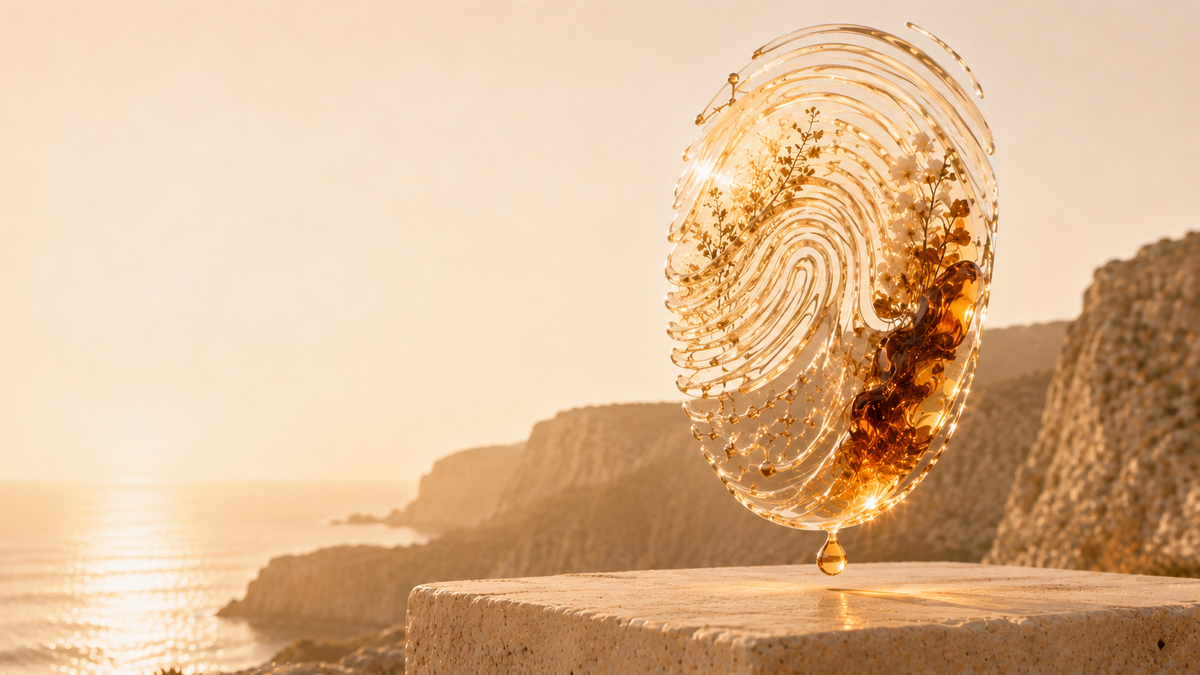
What Is Extrait de Parfum? Meaning, Concentration and Performance
Extrait de parfum is a highly concentrated form of fine fragrance, commonly formulated with approximately 20% to 40% fragrance concentrate. Also known as perfume extract or parfum, it often creates a rich, nuanced wearing experience. However, higher concentration does not automatically mean stronger projection, longer-lasting performance or superior quality.
What makes extrait de parfum different from eau de parfum? The answer extends beyond fragrance concentration. Formula structure, ingredient selection, volatility and how a fragrance develops on skin all influence the result.
This guide explains what extrait de parfum means, how it compares with other perfume concentrations, and how to choose the right fragrance for your preferences.
What does extrait de parfum mean?
Extrait de parfum, also called perfume extract, parfum or pure perfume, is generally among the most concentrated categories of alcohol-based fine fragrance.
Industry guides commonly associate extrait de parfum with approximately 20% to 40% fragrance concentrate. However, these percentages are conventions rather than universally enforced definitions. Individual fragrances may fall outside this range.
The remaining formula commonly contains ethanol and may include water, co-solvents or other suitable supporting materials, depending on the formulation.
Importantly, fragrance concentration describes the proportion of fragrance concentrate in the finished product. It does not independently measure the intensity, sophistication or persistence of the scent.
Is extrait de parfum simply a stronger perfume?
Not necessarily.
A higher concentration can increase richness, density or persistence, but it does not automatically produce greater projection.
An extrait may remain relatively close to the skin while developing gradually over several hours. Conversely, a well-designed eau de toilette or eau de parfum may project more noticeably because of its fragrance materials and structure.
Performance depends on several interacting factors:
-
The identity and concentration of individual fragrance materials
-
The balance of volatile and less volatile components
-
The diffusion characteristics of the composition
-
The solvent system and overall formulation
-
Skin characteristics and application method
-
Temperature, humidity and environmental conditions
-
The amount of fragrance applied
Concentration matters, but the architecture of the perfume matters just as much.
Extrait de parfum vs eau de parfum: What is the difference?
Eau de parfum generally contains a lower proportion of fragrance concentrate than extrait de parfum, although the concentration ranges used by manufacturers can overlap.
The difference is not necessarily achieved by simply adding more or less alcohol.
A perfumer may rebalance the fragrance composition for each concentration. An extrait interpretation might emphasise woods, resins, musks or deeper floral elements, while an eau de parfum interpretation may emphasise brightness, lift or diffusion.
Consequently, two concentrations sold under the same fragrance name may share a recognisable identity without smelling identical.
Extrait de parfum may offer:
-
Greater richness or perceived density
-
A gradual and nuanced development
-
A more intimate scent character
-
Extended persistence, depending on the formula
-
A concentrated wearing experience with controlled application
Eau de parfum may offer:
-
A brighter or more expansive opening
-
Noticeable initial diffusion
-
A lighter overall wearing impression
-
Flexibility in application
-
A different balance between freshness and depth
These are possible characteristics, not fixed rules.
Neither concentration is inherently superior. The better choice depends on the fragrance itself and the experience you want from it.
Does extrait de parfum last longer?
Extrait de parfum can offer extended longevity, but concentration alone does not determine how long a perfume lasts.
A composition rich in volatile citrus materials may evolve quickly even at a relatively high concentration. Conversely, certain woods, musks, amber materials and resins can remain perceptible for considerably longer.
Longevity is also influenced by the interaction between fragrance materials, skin, clothing, environment and application quantity.
It is useful to distinguish between three aspects of fragrance performance:
-
Longevity: How long the fragrance remains perceptible.
-
Projection: How noticeably the fragrance radiates away from the wearer.
-
Sillage: The scent trail associated with a moving wearer.
A fragrance may have excellent longevity but relatively intimate projection. Another may create a noticeable opening and scent trail while becoming less perceptible sooner.
These characteristics should be evaluated separately rather than assumed from a concentration label.
How should you test an extrait de parfum?
A fragrance testing strip offers a useful first impression, but testing on skin provides additional information about the wearing experience.
For a more reliable evaluation:
-
Begin with a controlled application rather than applying an excessive amount.
-
Allow the fragrance to settle naturally without rubbing the application area.
-
Evaluate the opening during the first several minutes.
-
Reassess after approximately 30 minutes to observe its development.
-
Return after several hours to evaluate persistence and the later stages of the composition.
-
Repeat the evaluation on another day before drawing a final conclusion.
Blotters and skin provide different testing environments. Neither should be treated as a complete substitute for the other.
The objective is not simply to measure how long a fragrance survives, but to understand how its character evolves and whether that evolution appeals to you.
How to choose the right perfume concentration
Choosing between extrait de parfum, eau de parfum and other concentrations should begin with personal preference rather than the assumption that a higher percentage guarantees a better perfume.
Consider these questions:
-
Presence: Do you prefer noticeable diffusion or a more intimate scent?
-
Development: Do you enjoy a bright opening or a gradual, deeper evolution?
-
Environment: Will the fragrance be worn in an office, outdoors, socially or for special occasions?
-
Application: Do you prefer restrained application or greater flexibility in spraying?
-
Character: Does the fragrance feel distinctive, balanced and comfortable throughout its development?
-
Identity: Does the fragrance reflect how you want to express yourself?
The most meaningful fragrance is not necessarily the loudest or the most concentrated.
It is the one that continues to feel right for you.
How ICBM approaches fragrance concentration
At ICBM, concentration is approached as a formulation and creative decision rather than simply a marketing number.
As an Australian fine-fragrance house, our philosophy centres on identity, character, balance and the complete wearing experience.
We believe that the quality of a fragrance cannot be reduced to its concentration percentage.
The selection of materials, their relationship within the composition, the development of the fragrance and the experience of the wearer are all essential considerations.
Richness should have purpose. Diffusion should feel intentional. Persistence should support the fragrance's character rather than overwhelm it.
Each composition should express a coherent identity, whether its presence is intimate or expansive.
Three worlds. One you.
Frequently asked questions
What is extrait de parfum?
Extrait de parfum is a highly concentrated category of fine fragrance, commonly associated with approximately 20% to 40% fragrance concentrate. It is generally more concentrated than eau de parfum, although individual formulations and industry conventions vary.
What does extrait de parfum mean in English?
Extrait de parfum is a French term commonly translated as perfume extract. It refers to a concentrated perfume formulation rather than a specific guarantee of strength or longevity.
Can extrait de parfum contain 40% fragrance concentrate?
Yes. Some extrait de parfum formulations contain approximately 40% fragrance concentrate, and certain compositions may exceed that level. However, the percentage does not independently determine quality, projection or longevity.
Is extrait de parfum the same as perfume oil?
No. Extrait de parfum is commonly alcohol-based, whereas perfume oils generally use an oil or another non-alcoholic carrier. Their application, evaporation, diffusion and wearing characteristics can differ.
Is extrait de parfum stronger than eau de parfum?
Extrait de parfum generally contains a higher proportion of fragrance concentrate, but that does not necessarily mean it projects more strongly. Performance depends on the materials, composition and overall formulation.
How long does extrait de parfum last?
There is no universal duration. Longevity varies with the formula, individual fragrance materials, application quantity, skin characteristics and environment. Testing the particular fragrance provides more reliable information than concentration alone.
Is extrait de parfum suitable for everyday wear?
Yes. Suitability depends on the fragrance's character, application quantity, wearer preference and setting rather than concentration alone.
Is extrait de parfum better than eau de parfum?
Neither concentration is automatically better. An excellent eau de parfum may offer greater diffusion or a brighter character, while an extrait may provide a richer or more intimate experience. The composition and individual preference determine which is more suitable.
Discover the ICBM fragrance house.
Explore a world where fragrance is more than concentration, projection or longevity. It is an expression of identity.
ICBM — I Can Be Myself.